

Suncoast Safety provides all Safe Work Method Statements (SWMS) & Mobile Plant Risk Assessments in Electronic editable PDF form and hard copies posted to you. We also provide 7 days a week of help and support including after hours.
We are here to help and support you and your business with nearly 20 years of experience.
Areas we service are Sunshine Coast, Brisbane, Gold Coast, Wide Bay, Hervey Bay, Bundaberg, North Brisbane, Ipswich, Toowoomba, South Brisbane, Tweed, New South Wales, Victoria, Northern Territory, Western Australia, North Queensland, Central Queensland, Cairns, Townsville, Rockhampton, Mackay
Ring us today for a free no obligation quotation Phone: 0429990418
Email: [email protected]
Purpose
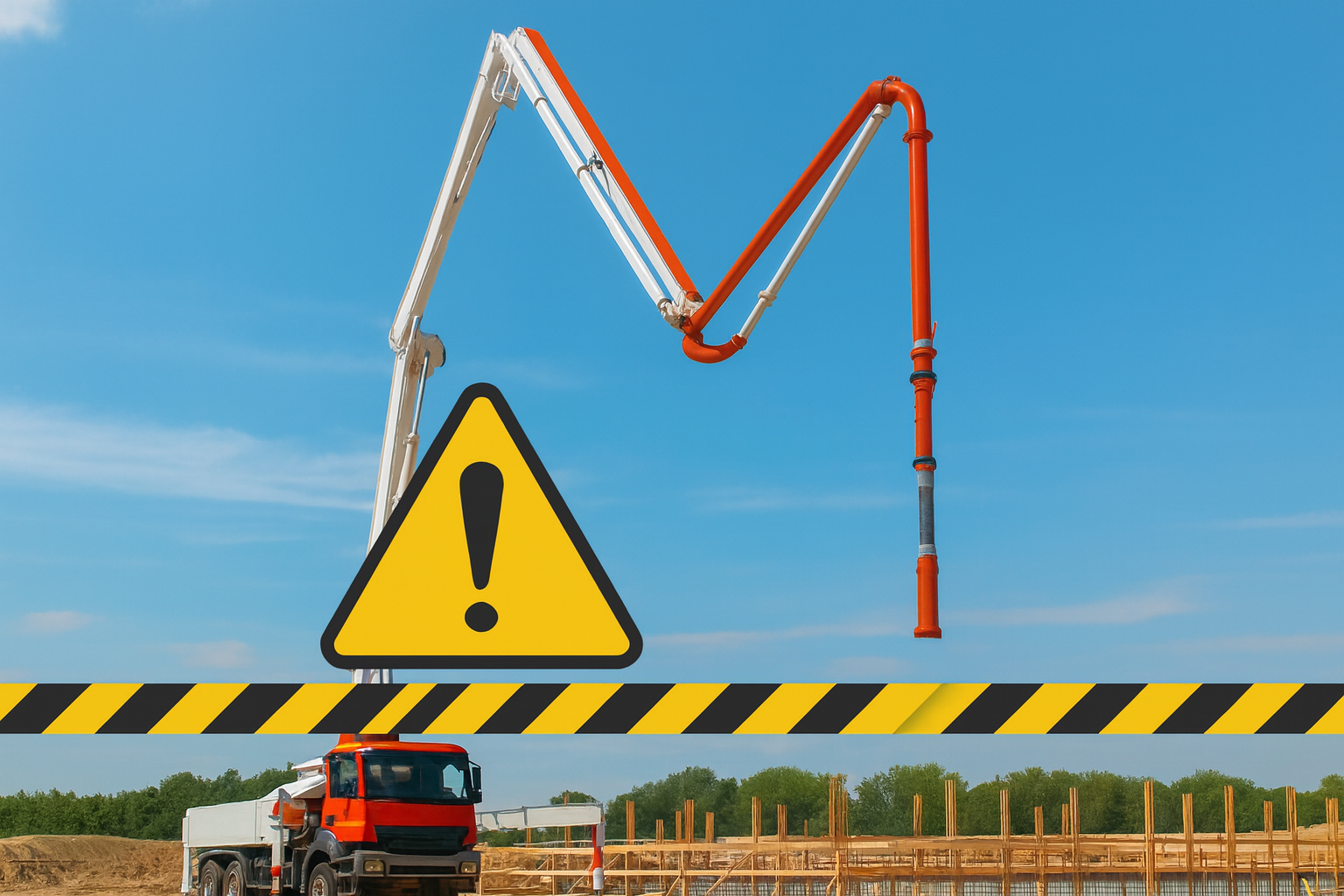
This safety alert relates to a fatal incident involving a concrete ‘reducer’ that fell from the boom tip of a mobile concrete placing boom. This alert highlights risk control measures that should be applied to prevent similar incidents. The information contained in the alert is relevant to owners and operators of placing booms along with workers, builders and principal contractors.
Background
On 1 December 2025, a young worker tragically lost his life when a concrete pump reducer pipe fell from the end of a mobile placing boom being set up on a housing site on the Gold Coast.
A reducer is the term used to describe a short length of steel concrete delivery pipe where the pipe diameter reduces to allow smaller diameter pipes to be fitted to the concrete delivery line.
Contributing factors
The cause of this incident is being investigated. Reducers and drop hoses can fall from a placing boom for a number of reasons including the following:
- Loose or worn pipe clamps.
- Pipe clamps that are too large for the pipe flanges they are attached to.
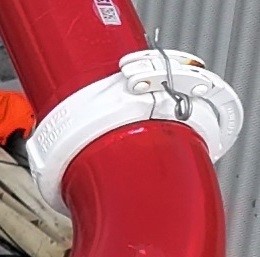
- Quick release clamps that are missing their ‘R-clip’ and can unintentionally open (a properly inserted R-clip will prevent unintentional opening of a pipe clamp – Refer Photograph 1).
- Absence of a safety sling attached between the reducer and drop hose and the boom tip intended to catch the hose and reducer if a clamp fails.
Action required
The following risk control measures need to be implemented on all concrete placing booms as a matter of urgency:
Pipe clamps
- Pipe clamps are of the correct type and size for the concrete delivery line with the correct rubber seal that allows the clamp to be closed without the need to apply excessive force.
- Clamps on reducers and drop hoses always remain closed when a placing boom is being operated or is unfolded.
- Quick release clamps are always kept in the closed position with R-clips or similar installed so that the clamps cannot be unintentionally opened.
- Clamps are kept free of concrete buildup so that they can be closed and form an effective seal on pipe flanges.
Safety slings on reducers and drop hoses
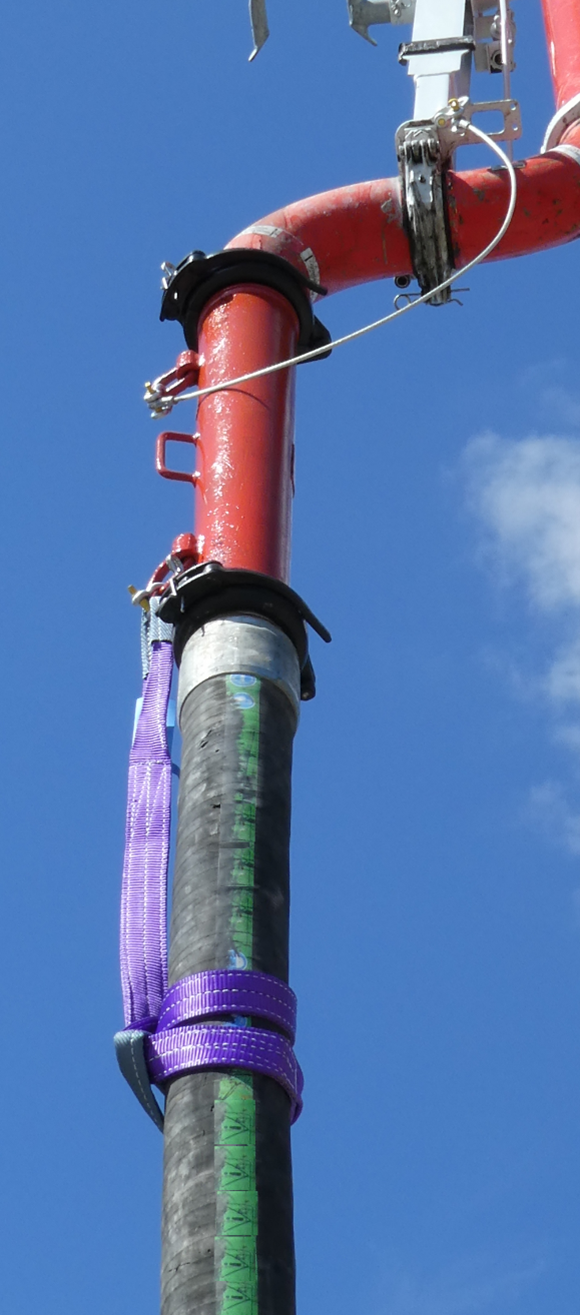
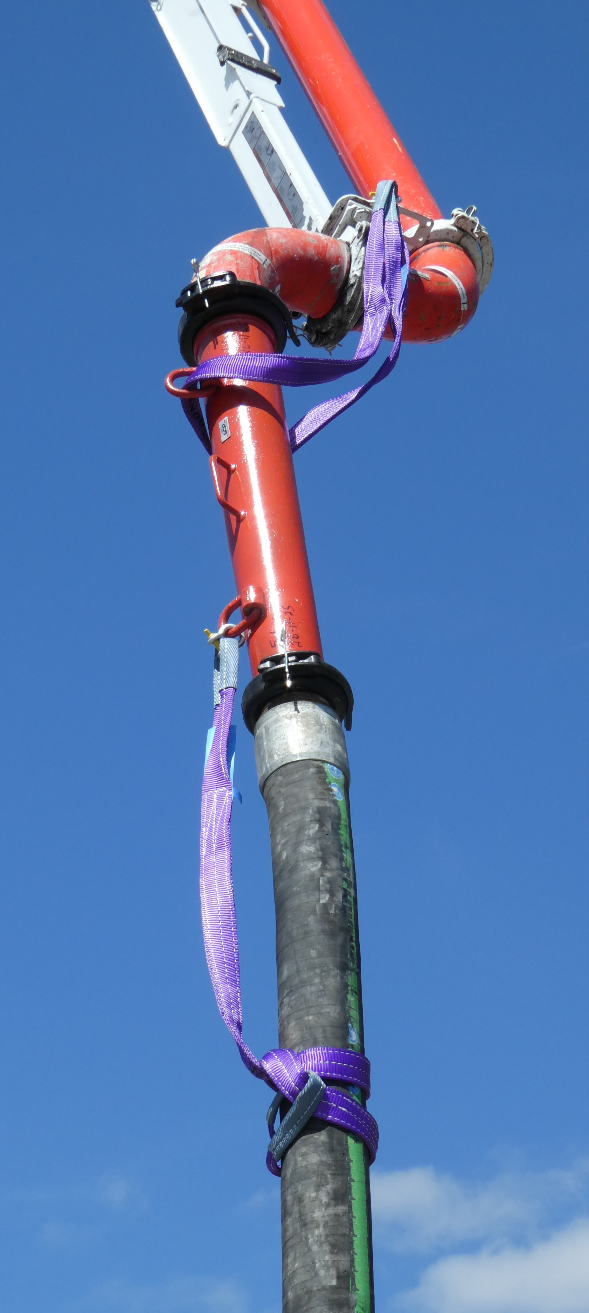
- Drop hoses and delivery pipes (e.g. reducers) attached to the tip of a concrete placing boom are to be provided with safety slings that will prevent the hose or pipe falling to the ground in the event of clamp failure.
- Where more than one reducer is attached to the boom tip all reducers are to be provided with safety slings.
- Safety slings should comply with the placing boom manufacturer’s instructions and be a proprietary product designed for this use or be made up of load rated sling(s). Where synthetic lifting slings are used, these should have a minimum working load limit of 1 tonne (i.e. coloured purple). Round synthetic lifting slings are to comply with Australian Standard AS 4497 Round slings—Synthetic fibre andflat synthetic lifting slings with AS 1353.1 Flat synthetic lifting slings.
- Safety slings should be attached with tightened shackles to lugs on the reducer(s) and choked around the drop hose.
- Where slings are attached to lugs on reducers the lugs are to be designed to withstand shock loading applied if a clamp was to fail.
- A safety sling needs to be attached in such a way to reduce potential free fall distance of the hose or pipe.
- Where flexible steel wire rope or a chain is a safety sling, these need to be set up so as the sling will not accelerate wear on the drop hose nor reduce drop hose diameter so that concrete flow is restricted.
- Photographs 2 and 3 show two acceptable options for safety slings attached to a reducer and a drop hose.
Safety inspections of slings and clamps
- The placing boom operator should inspect pipe clamps, slings, sling connectors, and anchor points for slings, as part of the daily inspection.
- Safety slings should be inspected in accordance with inspection criteria included in applicable Australian Standards. This includes replacing slings that are cut, worn or otherwise damaged.
- Both the annual and 6-year major inspections of a placing boom need to include a thorough inspection of all pipe clamps, safety slings and connectors/anchorage points. The results of these inspections need to be documented in the annual and major inspection reports.