Purpose
This safety alert relates to a fatal incident involving a Stockpile Dozer rollover. This alert specifically applies to the safe operation of dozers to minimise the risk of injury or death from dozer rollovers and highlights risk control measures that should be applied to prevent incidents when dozers are used in stockpile applications (e.g. to spread materials). The information contained in the alert is relevant to employers, dozer operators, dozer manufacturers and dozer suppliers.
Suncoast Safety provides all Safe Work Method Statements (SWMS) & Mobile Plant Risk Assessments in Electronic editable PDF form and hard copies posted to you.
We also provide 7 days a week of help and support including after hours.
We are here to help and support you and your business with nearly 20 years of experience.
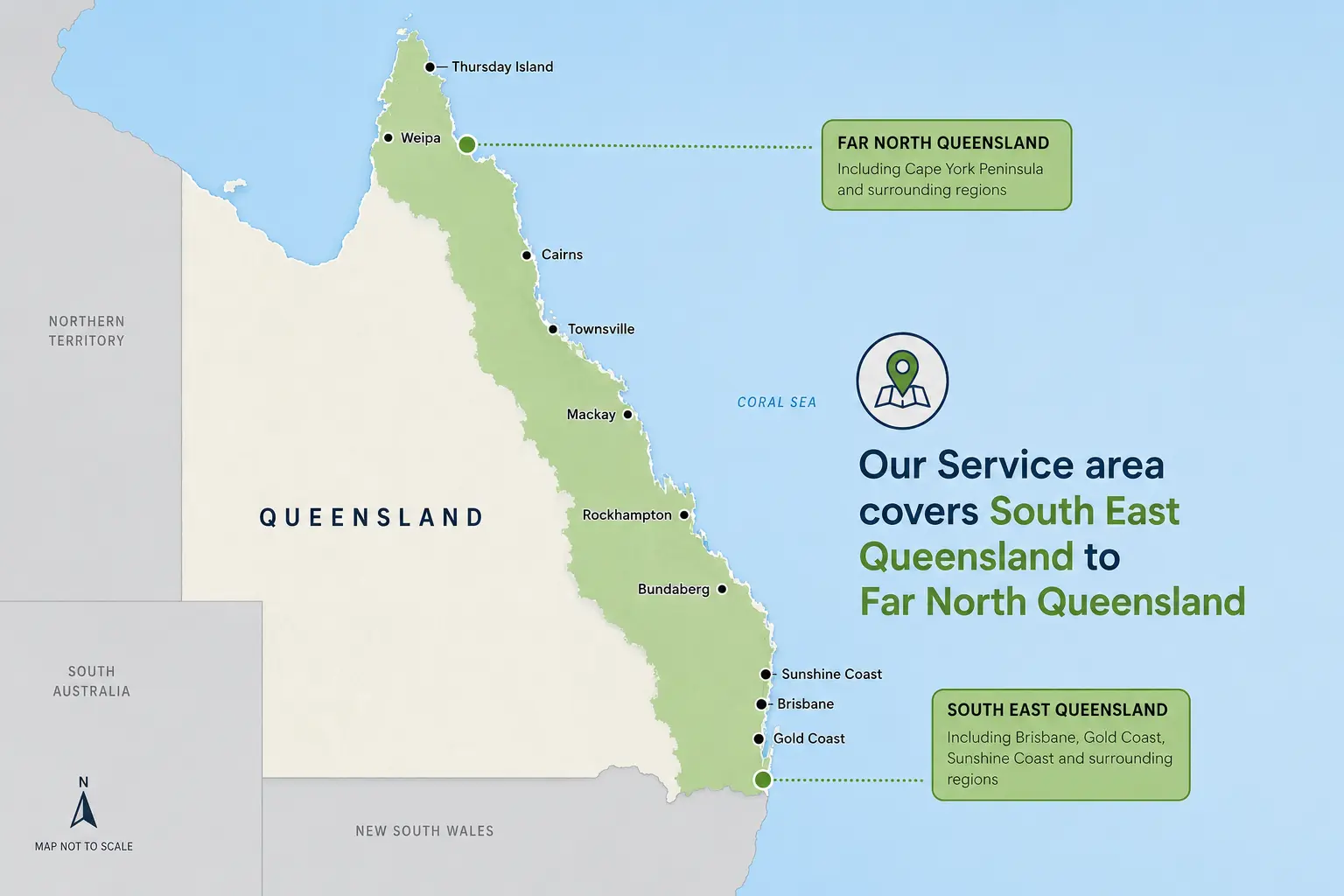
Areas we service are Sunshine Coast, Brisbane, Gold Coast, Wide Bay, Hervey Bay, Bundaberg, North Brisbane, Ipswich, Toowoomba, South Brisbane, Tweed, New South Wales, Victoria, Northern Territory, Western Australia, North Queensland, Central Queensland, Cairns, Townsville, Rockhampton, Mackay
Background
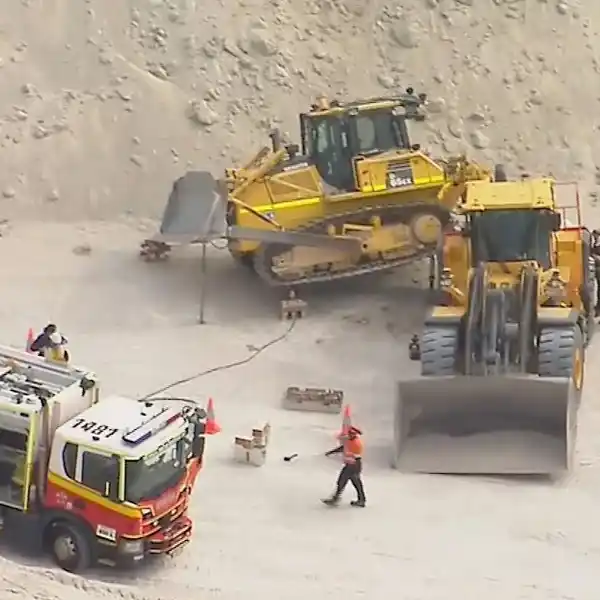
In January 2026, a plant operator was fatally injured when the dozer he was operating, rolled at a bulk material storage facility.
Initial investigations indicate he was operating the dozer on a stockpile when the dozer rolled over down the side of the stockpile. During the rollover the operator was ejected from the dozer’s cabin, sustaining fatal injuries.
Investigations into the cause of this incident are continuing.
In addition to this incident, there is a continuing pattern of dozer rollover and loss of control incidents across Queensland mine and quarry operations, including repeat scenarios involving reversing, cross grade work and operation near unprotected edges.
General
- While wearing a seatbelt remains a critical control, injury can still occur when a dozer rolls and the operator is wearing a seatbelt. The cabin should be designed and laid out so that in the event of a rollover the operator cannot hit their head on an obstruction (e.g. fire extinguisher mounted inside the cabin, additional displays and controls placed inside the operator envelope). Consideration should also be given to the design of the seat and seatbelt to minimise potential injury to workers if a dozer rolls, especially where a dozer rolls down a steep, long slope.
- Dozers need to be fitted with a rollover protection system (ROPS) complying with Australian Standard AS ISO 3471.
- Dozer operator skill levels need to be high so that the operator holds a comprehensive knowledge of both dozer operation and the safest method of carrying out the specific work activity. These skills will take time to develop. To confirm competency PCBU’s should ensure that new workers complete a verification of competency or on-the-job assessment to verify their skills. Additional guidance on machine operation can typically also be obtained from the equipment manufacturer or supplier.
- Newly trained operators should initially only work on lower risk dozer activities until their increased skill levels are confirmed by the PCBU. Only then should a worker progress to dozer operation in more hazardous terrain or for more hazardous activities.
- In addition to general training on safe dozer operation, documented familiarisation training, on the specific make and model of dozer, should be provided for operators. As part of the operator familiarisation training, it is advisable to include information regarding the characteristics (e.g. density, moisture content etc.) of the stockpile(s) on site and how this affects stockpile stability.
- Training should include a review of all safety features on the plant (e.g. ROPS structures, seat belts, operator presence systems etc.), along with emergency procedures that include steps to be taken if the operator believes that rollover is imminent.
- Seatbelts and ROPS are means of reducing the risk of a serious or fatal injury. It is best to implement work systems that will prevent the occurrence of a rollover in the first place.
- Where practical, consideration should be given to the use of systems such as remote-control dozer operation to remove operators from higher risk work.
More information
- Managing the risks of plant in the workplace Code of Practice 2021 (PDF, 1.57 MB)
- Excavation work Code of Practice 2021 (PDF, 1.9 MB)
- How to manage work health and safety risks Code of Practice 2021 (PDF, 0.65 MB)
- Mines Safety Bulletin No. 119 Hazards associated with loading operations at the base of stockpiles
- Industry guidance: CMEIG guidance which covers seat belt inspection and maintenance
- Relevant Australian Standards (subscription required):
- AS ISO 3471 – Earth-moving machinery – Roll-over protective structures – Laboratory tests and performance requirements
- AS 20474.1 – Earth-moving machinery – Safety, Part 1: General requirements