Warning
MAY CONTAIN DISTRESSING CONTENT TO SOME READERS
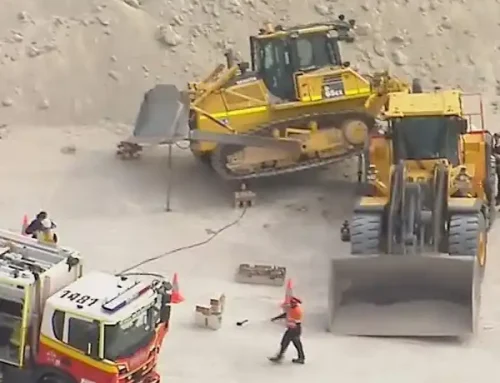
An incident in July 2025, involving the illegal use of high-pressure water spray equipment on an asbestos roof by a painting contractor, resulted in asbestos contaminated dust or debris (ACD) being spread across the site, including neighbouring properties and public roadway.
Investigations are continuing.
IMPORTANT
These findings are not yet confirmed, and investigations are continuing into the exact cause.
Suncoast Safety provides Safe Work Method Statements (SWMS) Asbestos removal and SWMS Working Near Asbestos in Electronic editable PDF form and hard copies posted to you. We also provide 7 days a week of help and support including after hours.
We are here to help and support you and your business with nearly 20 years of experience.
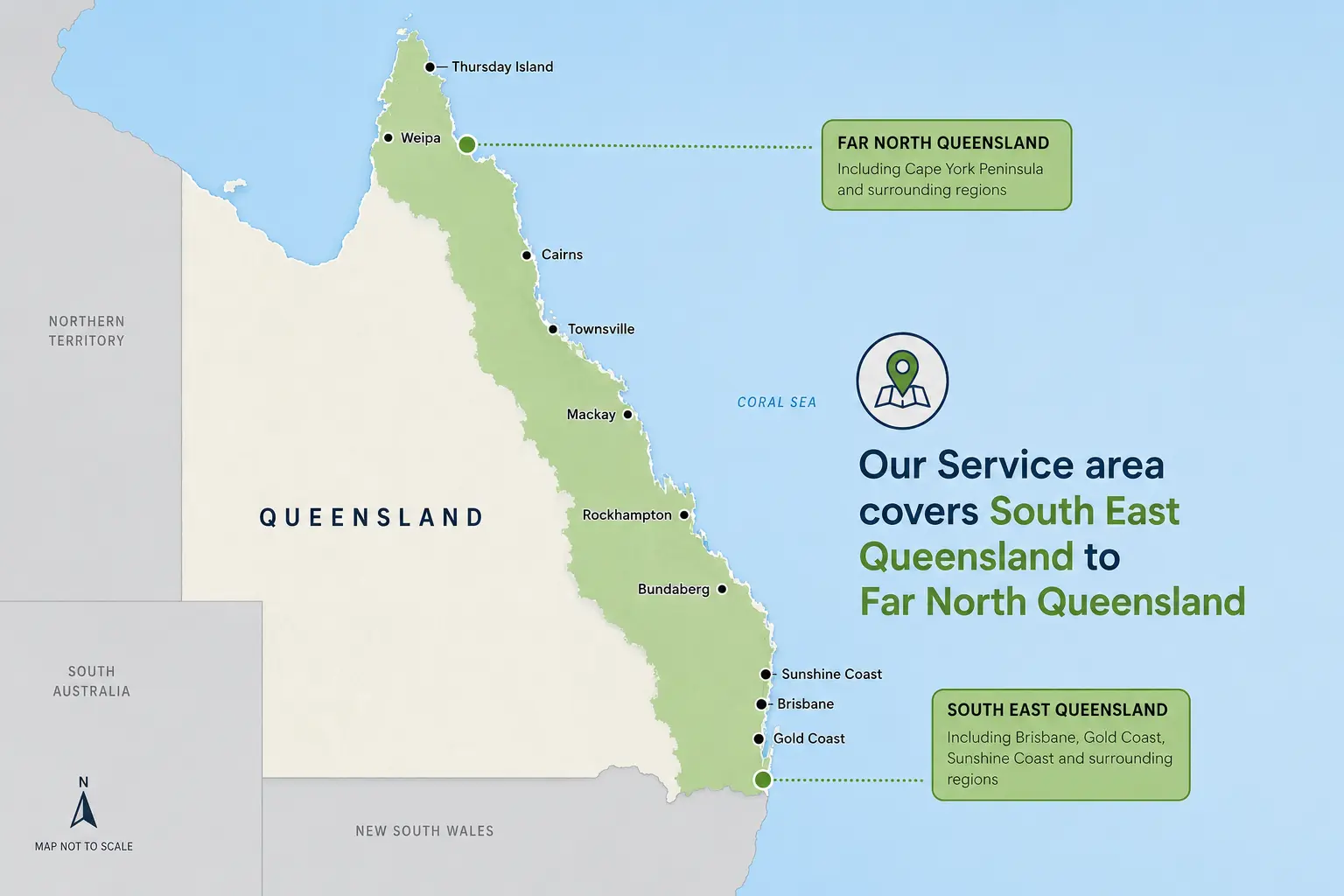
Areas we service are Sunshine Coast, Brisbane, Gold Coast, Wide Bay, Hervey Bay, Bundaberg, North Brisbane, Ipswich, Toowoomba, South Brisbane, Tweed, New South Wales, Victoria, Northern Territory, Western Australia, North Queensland, Central Queensland, Cairns, Townsville, Rockhampton, Mackay
Ring us today for a free no obligation quotation Phone: 0429990418
Email: suncoastsafety@yahoo.com.au
Safety issues
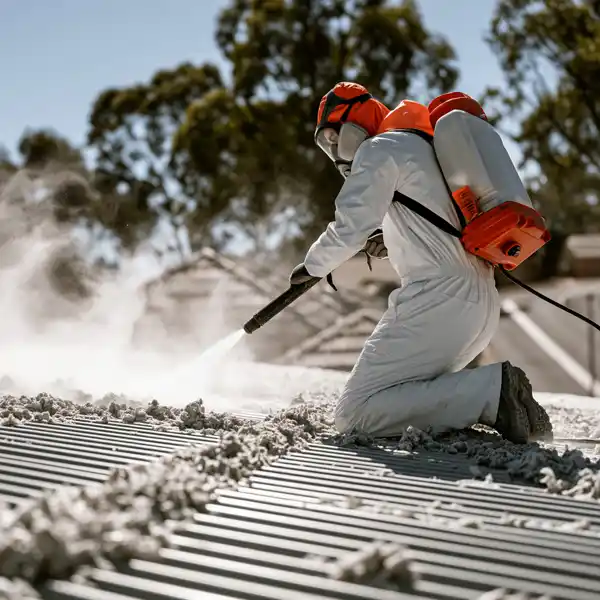
Asbestos is most dangerous when it’s deteriorating, damaged or disturbed. Cleaning asbestos cement roofs, fences and walls with high-pressure water spray equipment can destroy the binding matrix of asbestos containing material (ACM), resulting in cement debris, airborne asbestos fibres and widespread contamination.
Disturbed asbestos fibres that resettle on surfaces stick to everything including walls, plants, garden soil and lawns and are very easily disturbed again. These fibres remain for years if not decades if the contamination is not remediated.
Asbestos is common throughout older homes, built before 1990 – and not just the roofs.
Ways to manage health and safety
Effective risk management starts with a commitment to health and safety from those who manage the business. If an incident occurs, you will need to show the regulator that you have used an effective risk management process. This responsibility is covered by your primary duty of care in the Work Health and Safety Act 2011.
Use the hierarchy of controls to help decide how to eliminate and reduce risks in your place of work. The hierarchy of controls ranks types of control methods from the highest level of protection and reliability to the lowest. It’s a step-by-step approach to eliminating or reducing risks. You must work through the hierarchy of controls when managing risks, with the aim of eliminating the hazard, which is the most effective control.
Read more about the hierarchy of controls and managing risks.
Possible control measures to prevent similar incidents
You should never use high-pressure water spray equipment to prepare for painting, coating or sealing of asbestos containing materials as there is no system of use that can effectively capture or suppress asbestos fibres in such circumstances. It is illegal to use high pressure water spray equipment on asbestos, including asbestos cement roofs, soffits, fences, pipework and walls.
Under the Work Health and Safety Regulation 2011, a PCBU must not use, direct or allow a worker to use high pressure spray on asbestos or ACM. Before carrying out maintenance of a roof, consider whether asbestos could be present. When working on buildings constructed before 1990, it is likely asbestos could be present in roofing and other building materials.
Identification and risk assessment
Identifying asbestos or ACM is the first step in managing the risk of exposure to asbestos. This must be done by someone with the proper training, qualification and experience. As there may be more than one person in the workplace responsible, it is important all duty holders consult, cooperate and coordinate with each other as well as consulting with workers and health and safety representatives.
If asbestos has been found, the next step is to perform a risk assessment. This will help to figure out:
- if there is a risk your workers could be exposed to airborne asbestos
- whether any effective control measures are in place
- what actions you can take to control this risk
- how urgently you should act.
After assessing the risk of exposure to airborne asbestos in your workplace, you’ll need to implement control measures. You may need to use a combination of these controls in order to meet your responsibilities under WHS laws.
PCBUs must always aim to eliminate the hazard and associated risk first, for example by removing the asbestos sheeting. If the asbestos or ACM in your place of work is posing a serious risk, you should remove it. The How to safely remove asbestos Code of Practice 2021 (PDF, 2.22 MB) sets out how to remove asbestos including requirements for inspections, removal, transport and disposal.
If it is not reasonably practicable to remove the asbestos, then other control measures must be implemented to ensure people are not exposed to airborne asbestos. This may involve a single control measure or a combination of different controls that provide the highest level of protection. The How to manage and control asbestos in the workplace Code of Practice 2021 (PDF, 2.22 MB) provides practical guidance to PCBUs on how to manage risks associated with asbestos, asbestos containing material (ACM) and asbestos-contaminated dust or debris (ACD) at the workplace.
These can include but are not limited to the following.
Encapsulating
Asbestos that is encapsulated in a resilient matrix (in reinforced plastics, vinyls, resins, mastics, bitumen, flexible plasters and cements) has little opportunity to release airborne asbestos unless the matrix is damaged. This type of encapsulation will seal any loose fibres into place and should be used only when the original asbestos bond is still intact. If encapsulation is recommended, the person carrying out the work should:
- be trained and experienced in working with asbestos
- hold the appropriate licences
- isolate the area
- use suitable RPE that complies with AS/NZS 1716: ;Respiratory protective devices
- wear suitable protective clothing such as disposable overalls
- follow a safe system of work that reduces the risk of creating airborne asbestos
- follow a decontamination procedure upon completion of the task.
Sealing
Sealing is the process of covering the surface of the material with a protective coating over the asbestos to prevent exposure to airborne asbestos. The process either coats the material, reducing fibre release, or binds the fibres together. Asbestos should be sealed, coated or painted to protect it.
There are alternatives available for cleaning Super Six and other ACM containing roofs, including the use of specially designed fungicides, primers and coatings for use on ACM roofs. By utilising this method, the ACM surface is treated and sealed while minimising the risk of disturbing and releasing airborne asbestos fibres from the roof surface. Sealing asbestos is the least effective method for controlling the release of airborne asbestos.
Workers will need to use personal protective equipment (PPE) in combination with other effective control measures when working with asbestos. Your selection and use of PPE should be based on your risk assessment. PPE includes but not limited to:
disposable coveralls (disposable coveralls with fitted hoods and cuffs should be worn and need to be of a suitable standard to prevent penetration of asbestos fibres – disposable coveralls rated type 5, category 3 (EN ISO 13982–1) or equivalent would meet this standard)
footwear boot covers and gloves (laceless boots such as gumboots are preferred where practicable and if boot covers are worn, they should be of a type that has anti-slip soles to reduce the risk of slipping)
- gloves, which should be determined by a risk assessment (if significant amounts of asbestos fibres may be present, disposable gloves should be worn). Any gloves used must be disposed of as asbestos waste regardless of the amount of asbestos present.
- respiratory protective equipment (RPE). The selection of suitable RPE depends on the nature of the asbestos work, the probable maximum concentrations of asbestos fibres that would be encountered in this work and any personal characteristics of the wearer that may affect the facial fit of the respirator (e.g. facial hair and glasses). A competent person should determine the most efficient respirator for the task.
Administrative controls can be used to minimise any remaining risks (e.g. safe work practices) and can include work methods or procedures designed to minimise exposure to asbestos fibres as well as the information, training and instruction needed to ensure workers can work safely.
Workers who are required to conduct asbestos-related activities and wear PPE must be given adequate training and supervision to enable them to fit and use the equipment correctly and conduct the task in a safe manner.
Tag your equipment to warn others not to use water blasters on asbestos containing material.
Administrative controls and PPE are the least effective at minimising risk because they do not control the hazard at the source and rely on human behaviour and supervision. These control measures should only be used:
to supplement higher level control measures
as a short-term interim measure until a more effective way of controlling the risk can be used, or when there are no other practical control measures available.
The control measures you put in place should be monitored and reviewed regularly to make sure they work as planned.
More Information
When preparing a SWMS the following must be taken into account:
- the circumstance at the workplace that may affect the way in which the highrisk construction work is carried out
- on a construction project, the WHS management plan prepared by the principal contractor.
#identify the work that is high risk construction work
#specify hazards relating to the high risk construction work and risks to health and safety associated with those hazards
#describe the measures to be implemented to control the risks
#describe how the control measures are to be implemented, monitored and reviewed.
A SWMS should also include the following information:
- the PCBU's name, address and ABN (if they have one)
- details of the person(s) responsible for ensuring implementation, monitoring and compliance with the SWMS
- if the work is being carried out at a construction project:
#the name of the principal contractor
# the address where the high risk construction work will be carried out
# the date the SWMS was prepared and the date it was provided to the principal contractor
#the review date (if any).
A SWMS may also include:
- the names of workers that have been consulted on the content of the SWMS
- the date the consultation occurred
- the signature of each worker acknowledging their participation in this consultation and the opportunity to discuss the proposed measures.
The content of a SWMS should provide clear direction on the control measures to be implemented. There should be no statements that require a decision to be made by supervisors or workers. For example, the statement 'use appropriate PPE' does not detail the control measures. The control measures should be clearly specified.
Workers and their health and safety representatives should be consulted in the preparation of the SWMS. If there are no workers engaged at the planning stage, consultation should occur with workers when the SWMS is first made available to workers for example, during induction training, or when it is reviewed such as during workplace-specific training or a toolbox talk. For more information on developing a SWMS, see the template located in appendix B of the Working safely in the house relocation industry guide.
Identifying hazards
in the workplace
Identifying, examining and preventing risks
& workplace hazards
OFFICE: 5/127 Sugar Rd, Alexandra Headland QLD 4572
Our Service area covers South East Queensland to Far North Queensland